God gave you a human nature -- a mind and heart, body and spirit -- to grow closer to him.
The Human Mind
The Human Mind
The mind houses cognition, where people think about their life experiences,
store past learning, plan for future contingencies, and make choices about
whether or not they seek God as an intimate companion.

For all who
seek a living relationship with the Trinity, the mind plays a crucial role, capable not
only of conversing with God, but of understanding God’s
self-disclosure received through the Bible, God’s living and lively Word,
which conveys a historical record regarding God’s attributes and expectations
about people’s personalities and patterns of behavior.
For good
reason Paul says, “Be transformed by the renewing of your mind” (Ro 12:2).
The pursuit of
God requires intellectual commitment, a hunger to know God interpersonally, and
a willingness to develop conceptual constructs in accord with the Word of God and in the person of Christ. To think about
God is a good thing, to pray to him even better, asking what matters to him,
and what his plans are for one’s life. This takes the discipline, mental focus,
and thoughtfulness that only the mind can bring.

The Human
Heart
While the mind
plays a crucial role in self-understanding and perceiving enough about God to
trust in him, it is the heart, one’s emotional attitude, where God encounters
the person.
Whether it is God speaking through the prophets to the
Israelites or Christ speaking about
what really matters in a relationship with the Father, the heart holds high status in
the eyes of the Lord.
“I will give
them a heart to know me, that I am the Lord. They will be my people, and I will
be their God, for they will return to me with all their heart” (Jer 24:7).
Parents want
their children to love them. Spouses
want to give and receive love. Friends share love through their loyalty and
enjoyment of each other. The Trinity desires to experience heartfelt human love, and
wants persons to know and trust God's love for them.
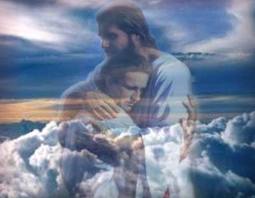
Carrying on a
relationship with God brings inclusion in the active love flowing between the Father, the Son, and the Holy Spirit. Though it has received
little emphasis in the history of the Church, God is far more interested in
people feeling warmly connected to him than he is in all the rites and rituals
and rules combined—and not just connected by way of membership in the church,
but interpersonally connected to the Lord by way of attraction, excitement,
curiosity, delight, and celebration.
Jesus experienced John as the beloved disciple precisely because John more than all the rest cared for Jesus, treasuring the time they could spend together, the many talks they shared, the good times and frightening times they walked through together as friends, including the Last Supper, where John, alone among the disciples, rested his head on Christ’s shoulder, and at the cross, where Jesus entrusted his mother Mary to John’s tender, faithful care.
Jesus experienced John as the beloved disciple precisely because John more than all the rest cared for Jesus, treasuring the time they could spend together, the many talks they shared, the good times and frightening times they walked through together as friends, including the Last Supper, where John, alone among the disciples, rested his head on Christ’s shoulder, and at the cross, where Jesus entrusted his mother Mary to John’s tender, faithful care.
The sharing of
one’s emotions with God is not limited to love, but within that love,
encompasses occasions of frustration, confusion, depression, irritability,
complaint, anguish, insecurity, anxiety, loneliness, and even doubt. God, for
his part, never turns a deaf ear or tries to change the subject in order to cut
short a person’s cathartic release. The Lord draws especially near when one is
processing and ventilating human emotion, knowing that some feelings are
crucial to express before gaining a larger perspective. David, the Psalmist, a
man after God’s own heart, knew this well.
The Human Body
God views the
human body as good. He created it. He wants people to cherish it. “Do you not
know,” Paul says, “that your body is a temple of the Holy Spirit, who is in
you, whom you have received from God?” (1 Cor 6:19). The human body—whose
tangible bone and tissue, muscle and sinew, brain and spinal cord, central and
autonomic nervous systems—is home to that mystery called the human spirit,
something that scientists can never explain. Paul declares that the body and
spirit are raised together in a personal resurrection that transfigures the corruptible
biological body into an incorruptible one like Jesus Christ’s (1 Cor 15:39-44;
Ro 8:23).
Yet persons
are called by God to live in their bodies in the here and now: touching,
tasting, seeing, hearing, moving, dancing, making love, playing sports,
walking, running, swimming, exercising, eating, drinking; using one’s hands to
express caring, write a poem, create a science experiment, or fold in prayer;
lifting one’s arms to embrace another with a hug, carry a load of groceries,
shovel snow, or praise the Lord: surely reason to celebrate the body—as does
the Son of Man during his time on earth.

As embodied
persons, human beings need techniques for reducing the distraction of body
tensions that mount in a stressful day. Teeth grinding, chest tightness,
migraines, or lower back pain need attention not only for bodily health, but
for finding the source of the underlying psychological stressors; not only for
mental health, but for the health of one’s relationship with the Trinity.
Relaxing the muscles and deepening the breathing helps the Holy Spirit move
through the human body to inspire the human spirit.
The Human
Spirit
The spirit
rounds out the fullness of human nature, the gift of God to Homo sapiens, a gift that differentiates
them from other mammals, bringing a level of awareness, choice, and
responsibility unparalleled in the animal or plant kingdoms.
While no field
of study can objectively account for the spirit within human existence, we can
say that when people are dispirited they are depersonalized, losing the sense
of meaning and purpose that would otherwise enliven them. This awareness
increases the trend for health professionals, including psychotherapists, to
respect and utilize spirituality as a healing force within human nature.
The human
spirit is not an ethereal, otherworldly affair, but rather a concrete, embodied
dimension of one’s grounding in Christ, the “life-giving spirit” (1 Cor 15:45).
While persons can live apart from a relationship with God, they cannot abandon
his image within them as the true origin of their existence. They can repress
the spirit that comes as part of human nature, or distort it to such an extent
that their behavior is far removed from God’s will. But they cannot escape the
reality that God loves them and is calling them into his family.

Christ’s entry
upon this earth unites the human spirit with God the Holy Spirit, who in turn
assists the human spirit to form an intimate, inner connection with God, a connection
that generates a conscience, not in the sense of Freud’s rule-shackled
superego, but in the sense of a living union with Christ, an inspired yet
vulnerable capability to know and do the Father’s will.
In other words, the
Holy Spirit is sent by the Father and Son to indwell the person, bearing
witness with their spirit that they belong to God. “And because you are children,
God has sent the Spirit of his Son into our hearts, crying, ‘Abba! Father!’”
(Gal 4:6). Invited to serve God with the same intentionality that Christ
did and the Holy Spirit does, individuals can now learn to do so, not by
following the letter of the law, but because God is so loveable.
For more, read:


